
See the latest news from Rescue Watercraft
Rescue Watercraft / Courses and training

Professional competence

Courses and training

Learn to operate a rescue watercraft (RWC) safely and professionally. Explore our Rescue Watercraft Operator and Rescue Watercraft Operator Instructor courses.

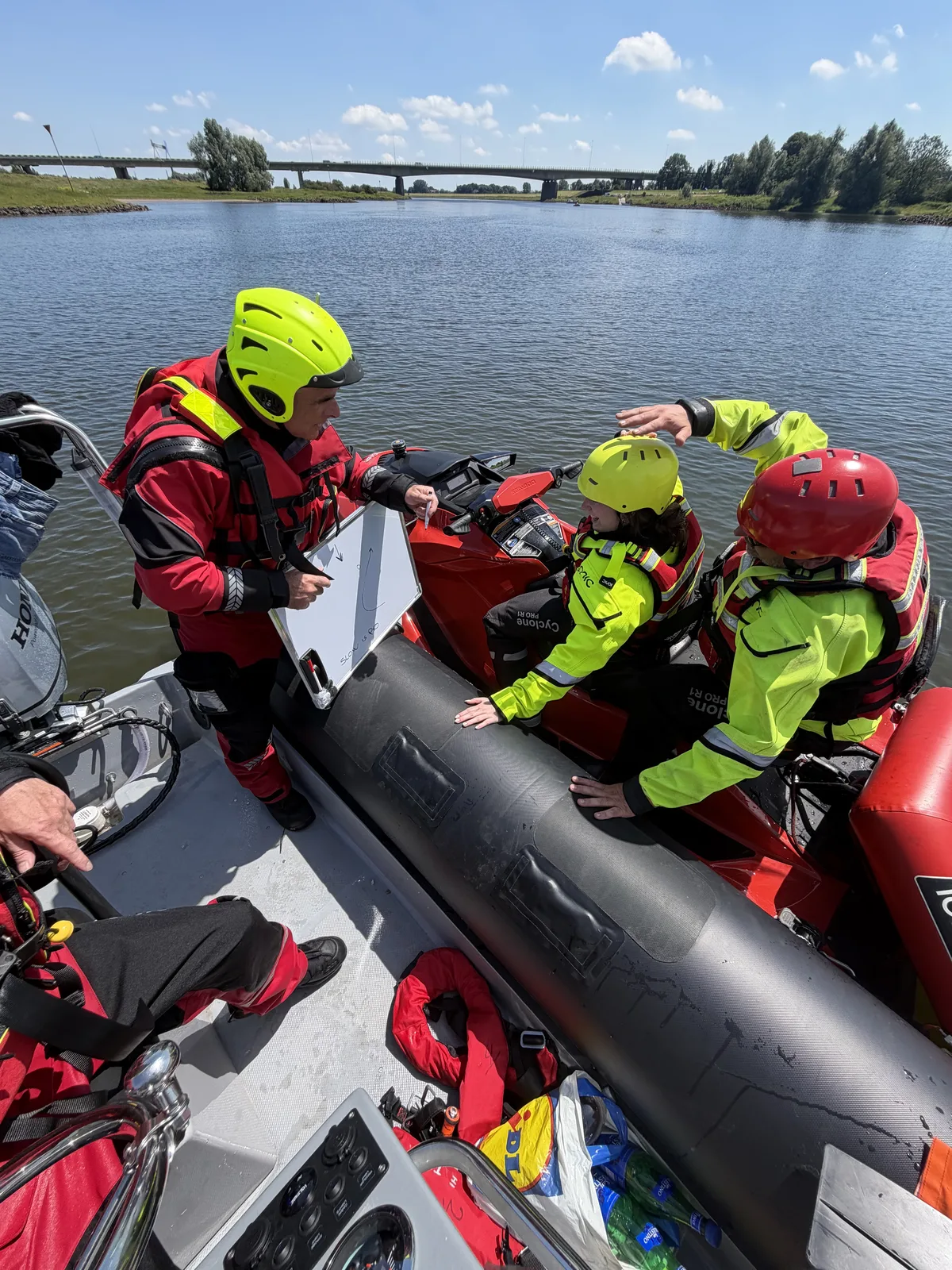
Instructor briefing participants beside a rescue watercraft
Instruction on the water
Rescue watercraft and rescue sled transporting a casualty with two rescuers
01Operator

Rescue Watercraft Operator

Learn to carry out professional, safe water rescues using a specially adapted personal watercraft and rescue sled. This three-day course combines theory with intensive practical training.

Duration3 days AudienceRescuers holding a Lifeguard or Fire Service Surface Water Rescuer qualification.
View details

Professional and safe water rescue

A specially adapted personal watercraft combined with a rescue sled is known as a Rescue Watercraft. This course teaches you to deploy this system safely and effectively during rescue and assistance operations, approaching casualties in a controlled manner and recovering them from the water.

Safe boat handling, manoeuvring, rescue techniques, communication and cooperation with other emergency services are central to the course, with particular attention to challenging conditions and river operations.

Entry requirements

  • At least 18 years old.
  • Lifeguard or Fire Service Surface Water Rescuer qualification.
  • Valid first-aid qualification.
  • A valid small craft licence (Klein Vaarbewijs I).

Course content

  • Safety procedures, regulations and pre-use checks.
  • Boat-handling and manoeuvring techniques in currents, waves and shallow water.
  • Safely approaching and rescuing casualties with the Rescue Watercraft.
  • Communication and cooperation with lifesaving organisations, the fire service, police and Rijkswaterstaat.
  • Capsize training: responding when the watercraft overturns.

Assessment and certification

The course concludes with a competency assessment (Proeve van Bekwaamheid, PvB), in which you demonstrate the required theoretical knowledge and practical skills.

After successfully completing the course and passing the assessment, an internationally recognised certificate is awarded in cooperation with the lifesaving organisation. The certificate is issued by the International Life Saving Federation of Europe (ILSE) and confirms that you meet the required standards for knowledge and skills in the rescue and safety sector.

More information

Contact us to learn more about the Rescue Watercraft Operator course and the options for your organisation.


Request information
Instructor guiding a participant on a rescue watercraft
02Instructor

Rescue Watercraft Operator Instructor

Develop from an experienced RWC operator into an instructor. This practical two-day course teaches you to train colleagues, rescuers and government personnel to become independent, safe RWC operators.

Duration2 days AudienceExperienced RWC operators from lifesaving organisations, emergency services and government organisations.
View details

Become an RWC instructor

The course combines theoretical knowledge with intensive practical training on the water. You develop the skills to prepare training sessions, give clear instructions and guide participants professionally and safely.

On completion, you can teach watercraft operation, safety and operational deployment in accordance with the training guidelines of the International Life Saving Federation (ILS).

Entry requirements

  • A valid RWC operator certificate.
  • At least one full season of experience operating a rescue watercraft, or demonstrable equivalent experience.
  • A valid first-aid qualification.
  • At least a small craft licence (Klein Vaarbewijs I).

Training programme

The course lasts two days and includes theory, practical training and a final assessment.

  • Lesson preparation and structure: planning, preparing and delivering effective training sessions.
  • Instruction and demonstration skills: clearly explaining and demonstrating boat-handling techniques, rescue actions and operating procedures.
  • Safety and risk management: recognising risks, applying safety measures and supervising exercises.
  • Training guidelines and assessment criteria: understanding the International Life Saving Federation (ILS) requirements for training and assessing RWC operators.
  • Practical instruction on the water: guiding and assessing participants during realistic rescue watercraft exercises.

Final assessment

The course concludes with an assessment of theoretical knowledge, practical skills and instructional skills. Assessment takes place under the responsibility of an authorised instructor from the lifesaving organisation, in accordance with the applicable training guidelines.

Who is this course for?

This course is intended for experienced RWC operators from lifesaving organisations, emergency services and government organisations who want to pass on their knowledge and practical experience to colleagues and new operators.

On completion, you have the instructional skills needed to deliver structured, professional and safety-focused RWC training.

Request information

Request information

Discuss your training needs.

Receive personal advice on the solution that fits your organisation, team and operation.